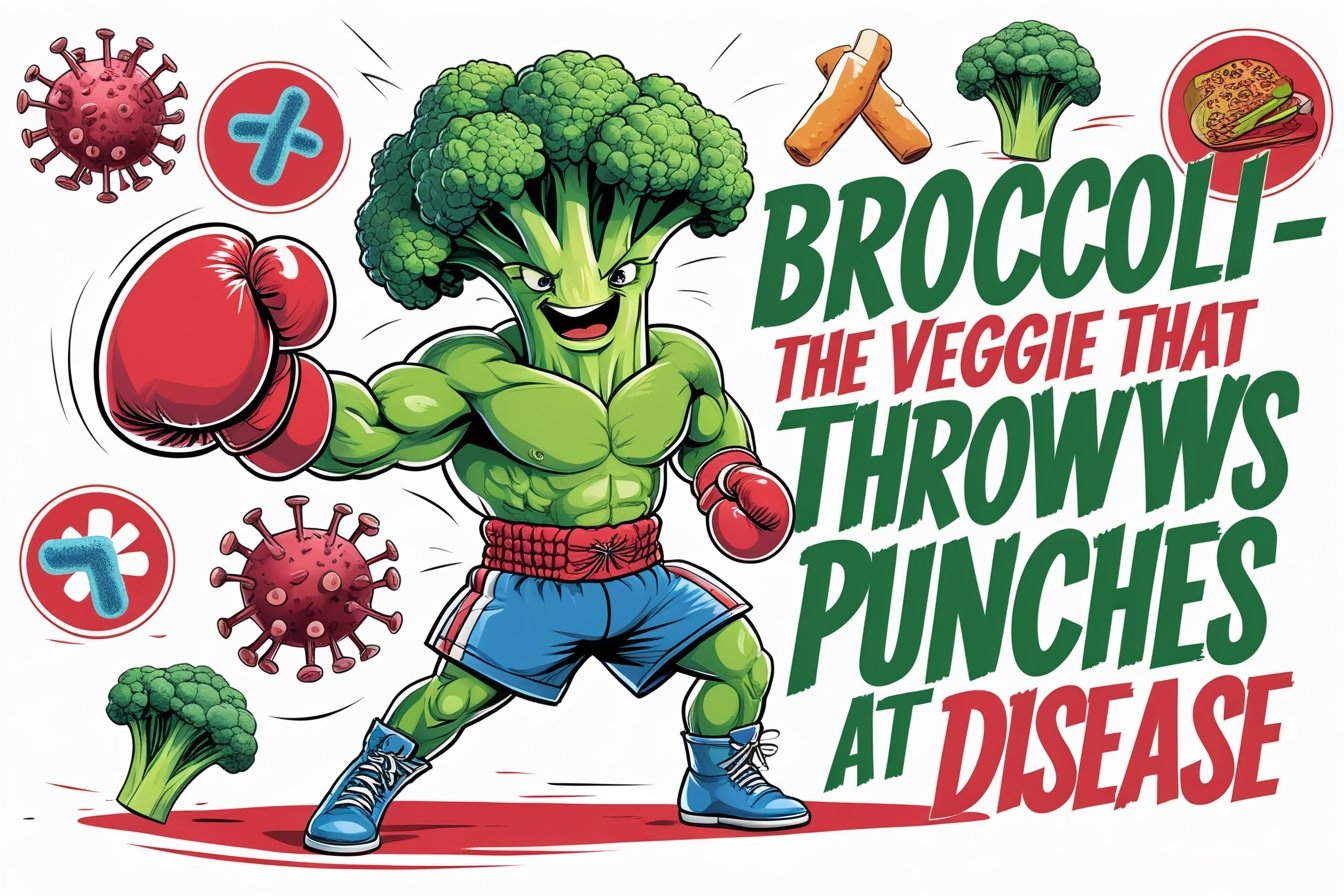
Imagine a green gladiator stepping into the ring, its florets raised like fists, ready to land a blow on cancer, inflammation, and aging. That’s broccoli, a cruciferous powerhouse packing a knockout punch against disease with every bite.
Broccoli’s Anatomy and Origins:
Broccoli belongs to the Brassica oleracea family, alongside kale, cauliflower, and cabbage. Its edible head, or crown, sprouts tiny buds poised to burst like landmines of nutrients. Cultivated in the Mediterranean nearly 2,000 years ago, broccoli’s journey from wild cabbage to dinner plate spans Roman banquets, Renaissance gardens, and modern supermarkets. Today, this green warrior stands as a poster child for cruciferous vegetables, revered for its dense concentration of vitamins, minerals, and disease-fighting compounds.
Broccoli’s Knockout Compound:
At the heart of broccoli’s arsenal lies sulforaphane, a phytochemical formed when the enzyme myrosinase meets glucoraphanin upon chopping or chewing. This compound pulls double duty:
- Disrupting cancer cell growth and triggering apoptosis (programmed cell death).
- Activating detox enzymes in the liver, flushing out potential carcinogens.
- Modulating inflammation by inhibiting NF-κB pathways.
Scientific trials show that sulforaphane may reduce the risks of breast, prostate, colon, and lung cancers, truly a knockout punch in the fight against malignancy.
Vitamins and Phytonutrients on Patrol:
Broccoli’s green fortress brims with antioxidants that scavenge free radicals and shield cellular DNA:
- Vitamin C: Strengthens immunity and supports collagen formation.
- Vitamin K: Essential for blood clotting and bone health.
- Beta-carotene (Vitamin A precursor): Protects vision and skin integrity.
- Flavonoids (quercetin, kaempferol): Dampen oxidative stress and quell inflammation.
- Lutein and zeaxanthin: Concentrated in the retina, guarding against age-related macular degeneration.
Together, these compounds form an antioxidant army, patrolling the bloodstream and intercepting molecular threats before they strike.
Fiber and Gut-Guardian Benefits:
Broccoli’s fiber content strengthens the digestive fortress and nurtures beneficial gut microbes:
- Soluble fiber: Feeds probiotic bacteria, supports short-chain fatty acid production, and helps regulate blood sugar.
- Insoluble fiber: Adds bulk to stool, accelerating transit time and preventing constipation.
By promoting a balanced microbiome, broccoli indirectly bolsters immune function, and nearly 70% of immune cells reside in gut-associated lymphoid tissue.
How Broccoli Calms Cellular Chaos:
Chronic inflammation underlies heart disease, diabetes, and arthritis. Broccoli deploys several anti-inflammatory agents:
- Sulforaphane: Suppresses pro-inflammatory cytokines (IL-6, TNF-α).
- Indole-3-carbinol: Helps modulate estrogen metabolism and reduce tumor-promoting signals.
- Kaempferol: Inhibits the COX-2 enzyme linked to pain and swelling.
Regular servings of broccoli correlate with lower markers of systemic inflammation, turning down the cellular heat that fuels chronic illness.
Heart in the Ring:
Broccoli throws strategic jabs at heart disease on multiple fronts:
- Cholesterol control: Fiber binds bile acids, reducing LDL (“bad”) cholesterol levels.
- Blood pressure support: Potassium helps relax vessel walls and counteracts sodium’s effects.
- Endothelial health: Antioxidants preserve nitric oxide, maintaining artery flexibility.
Clinical studies link cruciferous vegetable intake to a reduced risk of coronary events and stroke, making broccoli a trusted sparring partner for cardiovascular wellness.
Broccoli’s Support for Skeletal Health:
Beyond muscle and immunity, broccoli fortifies the skeletal stronghold:
- Calcium: Builds and maintains bone matrix.
- Vitamin K: Facilitates osteocalcin activation, a protein essential for bone mineralization.
- Magnesium and phosphorus: Work in tandem with calcium to ensure bone density.
For individuals at risk of osteoporosis, adding broccoli to the diet offers a non-dairy route to stronger bones.
Maximizing Nutrient Retention:
How you prepare broccoli can amplify, or diminish, its disease-fighting power:
- Steaming (5–7 minutes): Retains up to 90% of sulforaphane precursors and vitamins.
- Microwaving (with minimal water): Maintains high levels of antioxidants.
- Roasting: Enhances flavor but may reduce some heat-sensitive nutrients.
- Boiling: Least recommended, as water-soluble vitamins leach into cooking water.
For a potent counterpunch, chop florets, let them sit for 5 minutes to kick-start myrosinase action, then lightly steam.
Organic Farming and Sustainability Knockouts:
Pesticide residues can weaken broccoli’s health benefits and harm ecosystems. Opting for organically farmed or home-grown broccoli delivers purer produce:
- Companion planting with legumes or herbs improves soil fertility and pest resistance.
- Crop rotation reduces disease build-up and fosters biodiversity.
- Mulching and drip irrigation conserve water and nourish roots.
By supporting sustainable practices, you ensure the next generation of broccoli maintains its full disease-fighting potential.
Incorporating Broccoli into Your Daily Workout Regimen:
Athletes and fitness enthusiasts can harness broccoli’s nutrients to support recovery and performance:
- Pre-workout smoothie: Blend raw broccoli stems with spinach, banana, and protein powder.
- Protein bowl booster: Toss steamed florets into rice, quinoa, or grilled tofu dishes.
- Snack attack: Cut florets and serve with hummus or yogurt-based dips for a fiber-rich snack.
- Stir-fry staple: Quick-cook with lean proteins and healthy oils for a balanced post-exercise meal.
Regularly rotating broccoli into meals keeps your nutrient intake high and your defenses primed against training-induced stress.
Conclusion:
Broccoli stands out as a nutritional juggernaut, a humble veggie swinging mighty blows at cancer, inflammation, heart disease, and more. From its signature sulforaphane strikes to its robust antioxidant army, every bite packs a strategic combination of vitamins, minerals, and phytonutrients. By choosing optimal cooking methods, supporting sustainable farming, and weaving broccoli into daily meals, you unlock its full disease-fighting arsenal. Embrace this green warrior and let broccoli deliver knockout health benefits round after round.
FAQs:
1. Is broccoli really a superfood?
Yes. Broccoli’s combination of sulforaphane, antioxidants, vitamins, and fiber earns it “superfood” status for disease prevention and overall wellness.
2. How does sulforaphane fight cancer?
Sulforaphane triggers detox enzymes, disrupts cancer cell growth, and induces apoptosis in malignant cells.
3. What’s the best way to cook broccoli to retain nutrients?
Lightly steaming chopped florets for 5–7 minutes preserves sulforaphane precursors and water-soluble vitamins.
4. Can broccoli help with inflammation?
Absolutely. Compounds like sulforaphane, kaempferol, and indole-3-carbinol inhibit pro-inflammatory pathways and lower cytokine levels.
5. How much broccoli should I eat daily?
Aim for 1–2 cups of cooked or raw broccoli per day to tap into its health benefits without excess sugar or calories.
6. Are there any side effects to eating broccoli?
In rare cases, high intake may cause gas or bloating. People on blood thinners should monitor Vitamin K intake and consult a doctor.