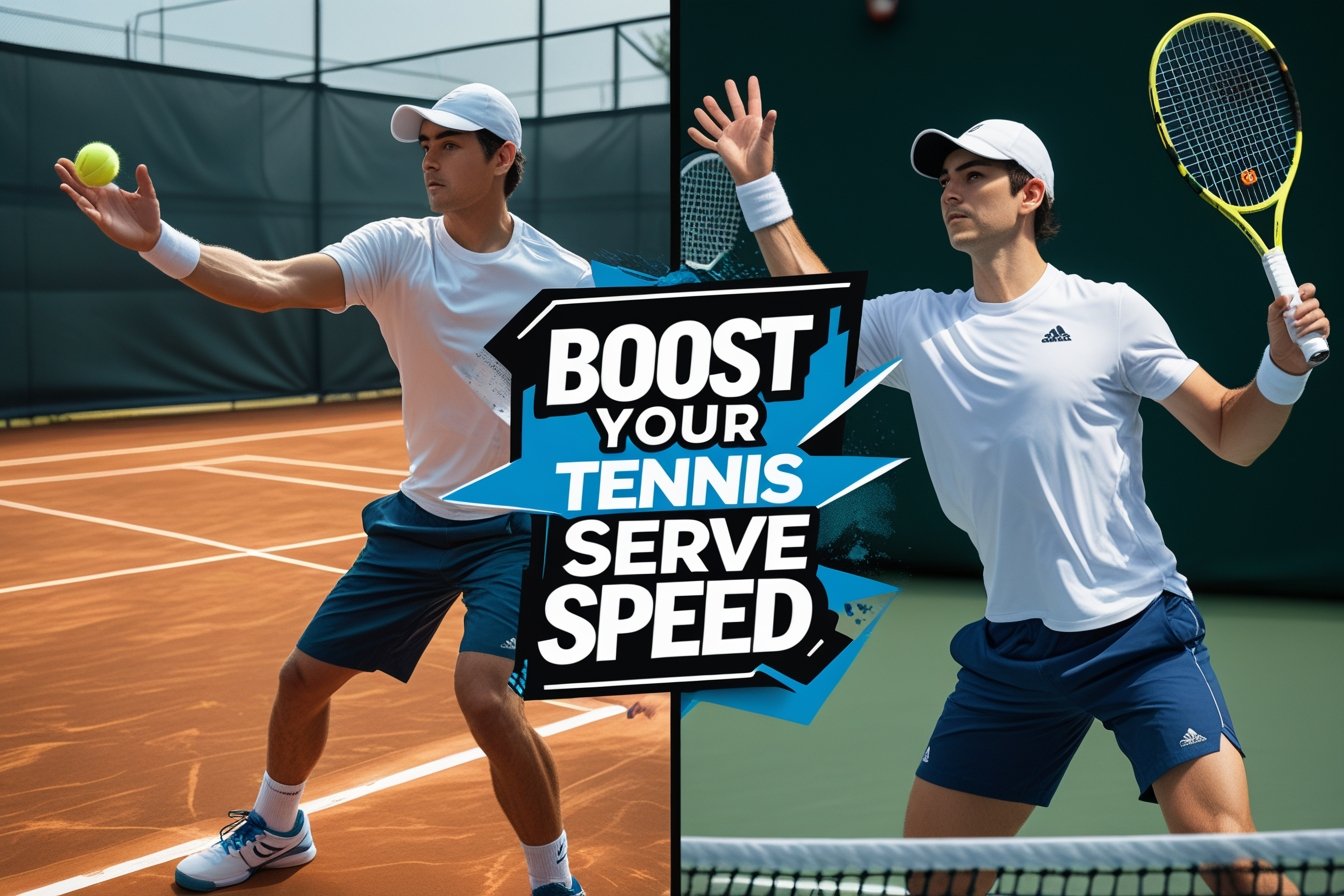
The most important shot in tennis is the Serve, and if the serve is fast and powerful, then the chance of winning the match increases. However, serving speed doesn’t just increase with strength; it is a result of technique, timing, fitness, and practice. In this article, we will learn how to improve serve speed naturally and effectively. Whether you are a beginner or have some experience, these tips can take your game to the next level.
The Science Behind a Fast Serve:
Increasing serve speed doesn’t require just strength, but every part of the body works together. It’s a complete chain where energy starts from the legs and reaches the racket. If this chain works properly, the serve is fast and powerful. In this part, we’ll understand how body mechanics, muscles, and timing affect serve speed.
Role of Kinetic Chain:
While serving, every part of the body moves in a sequence, from the feet to the hands. This process is called a kinetic chain. If your feet, waist, shoulders, and hands move in a correct flow, more energy is transferred to the ball, and the serve is faster.
- The power to serve doesn’t just come from the hands, the whole body works together.
- Energy comes from the feet first, then the waist, shoulders, and finally the racket.
- If the kinetic chain is smooth, both speed and control improve.
- If one part is slow, the service will be weak.
Importance of Angular Momentum in Shoulder Rotation:
When you serve, your shoulder turns. This turning has a scientific name, which is Angular Momentum. When the shoulder is turned fast and at a right angle, the speed of the racket increases, and the ball gets to the other end faster.
- Fast shoulder rotation gives the racket more speed.
- Angular momentum means rotating energy.
- Proper shoulder rotation generates more force.
- This motion makes the serve smooth and explosive.
Fast-Twitch Muscle Fibers and Explosive Movement:
We have two types of muscles in our body, slow-twitch and fast-twitch. For serving fast-twitch muscles is very important because it works fast and with strength. Training these muscles helps to increase the serving speed.
- Fast-twitch muscles use more power in a short time.
- Serve is an explosive movement, it uses fast-twitch muscles.
- Sprints, jumps, and plyometric drills are useful for training them.
- More explosive muscles = more serve power.
Why Timing Amplifies Speed More Than Force:
Many people think that the speed of serve comes with having strong muscles, but the timing is more important than that. If you hit the ball with the racket at a perfect time, then it generates more speed even with less strength.
- Correct timing transfers energy properly.
- Late or early contact slows down the ball.
- Timing is important, but timing doubles that time.
- Professional players can serve fast, even with less time, because the timing is perfect.
Master Your Serve Stance and Positioning:
For a powerful serve, strength is not the only thing you need but also stance (techniques of standing) and positioning are very important. If you are standing in the right place and in the right way, then you can hit the ball with more force and more balance.
Choosing Between Platform and Pinpoint Stance:
Before the serve, you choose one of two stances: Platform or Pinpoint. In the platform stance, both feet remain slightly apart on the ground, while in the pinpoint stance, you bring your back foot closer to your front foot before the serve.
Platform stance:
- Gives a stable and controlled serve.
- The balance remains strong.
- It is easy and safe for beginners.
Pinpoint stance:
- Gives explosive power.
- The jump is more.
- It becomes effective after a little practice.
Use the style that suits your body.
Foot Placement for Maximum Balance and Drive:
The position of the feet is very important during the serve. If your balance is not right, the serve becomes weak. Your front foot should be towards the baseline, and the back foot slightly behind, this way, you can jump and remain stable.
- Feet should be shoulder-width apart.
- The front foot should be straight toward the net.
- The back foot should be at a slight angle for more comfort.
- Both heels should be on the ground before the serve.
- When tossing, lean your body slightly toward the ball.
Ideal Distance from Baseline and Toss Zone Control:
When serving, you must stand very close to the baseline, but not cross the line. The ball toss must be very well controlled, neither too far back nor too far forward. The position of the toss determines both the direction and power of the serve.
- Stand exactly behind the baseline, but don’t go in until the serve is hit.
- Toss straight up over your front shoulder.
- The height of the toss should be as high as your arm stretch.
- Keep the toss consistent, in the same place every time.
- If the toss is wrong, the serve is also wrong.
Build a Serve-Ready Body:
If you want your tennis serve to be fast and powerful, then your body’s strength, balance, and flexibility must be strong as well. While serving, your whole body is at work, from up to down.
Upper Body Workouts:
The muscles that work the most during a serve are the shoulders, triceps (lower portion of the arm), and chest. If these muscles are strong, you can execute a fast and controlled serve. These muscles give speed and control to the racket.
- Shoulder presses and lateral raises strengthen the shoulders.
- Triceps dips or pushdowns increase arm strength.
- Push-ups and bench press make the chest powerful.
- Strong upper body = fast racket movement = fast serve.
Lower Body Explosive Drills:
The power of the serve starts from the ground, meaning the legs and hips. When you jump or push off, the muscles in your legs and thighs work. Making these muscles strong is very important for serve speed.
- Squats make the legs and hips strong.
- Jump squats and box jumps are best for explosive power.
- Lunges improve balance and leg control.
- More lower body power = more lift and speed in the serve.
Common Mistakes That Kill Serve Speed:
Many tennis players work hard, but that doesn’t increase their serve speed. The reason for this is some small mistakes, which halt the serving power.
Gripping the Racket Too Tightly:
If you serve with a very tight grip on the racket, the movement of your wrist and arm slows down. This reduces the racket speed, and the serve becomes dull. Relaxed grip gives more speed.
- Tight grip = slow racket swing.
- Wrist becomes stiff, serve is not fluid.
- Use a relaxed and comfortable grip.
- Squeeze a little only at the time of contact, keep it light the rest of the time.
Over-Rotating or Underusing the Legs:
Many people either twist too much or do not use their legs at all. Both are wrong methods. If the legs are not active, the serve will not get power from the ground. And if you twist too much, your timing will be ruined.
- Legs are the foundation of the serve, their use is essential.
- Too much rotation leads to loss of control.
- Too little rotation does not create power.
- The push from the legs and smooth rotation from the shoulders should be in balance.
Fear Kills Full Extension:
Many players get afraid while serving, either of stepping out of line or of a double fault. This fear makes your body tight, and you don’t do the full extension. This means that you don’t take the racket up with full strength, which makes the serve slow and incomplete.
- Fear = tight muscles = low speed.
- Serve with confidence, with full stretch.
- Take your whole arm up and make full contact with the ball.
- Practice and a positive mindset reduce fear.
Pro Tips From the Court:
Professional players not only use their strengths, but they also serve the ball smartly and with control. Their serve is fast and lands on the exact spot as well. If you understand their tricks and follow them a little bit, then you too can take your serve to the next level.
Analyze Slow-Motion Videos of Pros Like Federer, Kyrgios, and Serena:
Watching and understanding the serves of players like Federer, Kyrgios, and Serena helps a lot. When you watch their serves in slow motion, you can clearly understand their timing, footwork, toss, and body movement. All of these things improve your serve technique.
- Start watching the serves of pros in slow motion on YouTube.
- Focus on their stance, toss, and follow-through.
- Watch when they jump during the serve and where the racket is.
- Practicing by watching the videos teaches your body those movements naturally.
Serve Placement + Speed = Unstoppable Combo:
If your serve is just fast but goes to the center every time, the opponent can return it. But if you control the correct placement along with the speed, like serving on the sidelines or on the body, the opponent gets confused. The combo of both makes the serve unbeatable.
- Not just speed, learn to place the ball left, right, or on the body.
- Practice target, serve with cones or bottles.
- Make the serve unpredictable, sometimes slow, sometimes fast, sometimes wide.
- Placement + speed = point secured.
Conclusion:
The tennis serve is not just a game of strength, it is a smart combination of technique, strength, and rhythm. If you keep these three things in balance, your serve becomes naturally fast, accurate, and powerful. Serve speed doesn’t increase in a day, it is a slow journey that requires time, patience, and regular practice. As your serve improves, your confidence also increases, and when your confidence is strong, victory will not remain far from you. So don’t just apply force, learn to serve with understanding, serve smarter, not just harder.
FAQs:
Q1: Can beginners improve serve speed quickly?
Yes, by improving form and using proper technique.
Q2: Do I need a strong upper body to serve fast?
Strength helps, but coordination and timing matter more.
Q3: How often should I train to increase serve speed?
2–3 focused sessions per week yield good results.
Q4: Does racket type affect serve speed?
Yes, lighter racquets with stiff frames usually increase speed.